

When a tooth hurts but nothing looks obviously wrong, cracked tooth syndrome may be the culprit. This frustrating condition affects millions of adults and is one of the leading reasons people visit an endodontist. The tricky part is that cracks are often invisible on X-rays, which makes symptoms easy to dismiss and difficult to diagnose without the right expertise and tools. Understanding what cracked tooth syndrome looks like, why it happens, and what can be done about it is the first step toward getting real relief.
At West Atlanta Endodontics, our team focuses exclusively on endodontic care, giving us a deep familiarity with cracked teeth and the range of ways they present. Serving patients across Marietta and Cartersville, we bring the diagnostic precision and clinical experience needed to get to the bottom of tooth pain that has gone unexplained for too long.
What Is Cracked Tooth Syndrome?
Cracked tooth syndrome refers to an incomplete fracture in a tooth causing intermittent pain, most often during chewing or biting. Unlike a fully broken tooth, the crack may be invisible to the naked eye and undetectable on standard X-rays, making it one of the more challenging dental conditions to identify. The discomfort tends to come and go, which often leads patients to put off seeking care.
The American Association of Endodontists has noted a significant and growing increase in cracked-tooth diagnoses across the United States, with nearly half of surveyed endodontists reporting more cracked teeth and vertical root fractures than in prior decades. That upward trend makes awareness more important than ever.
Recognizing the Symptoms
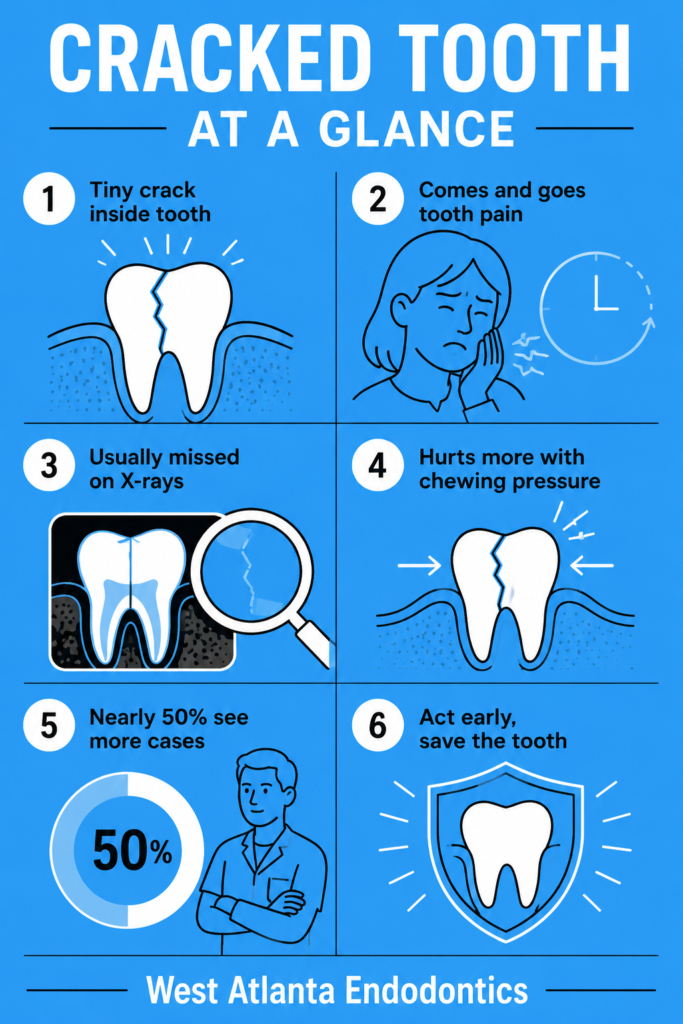
Cracked tooth syndrome does not always produce obvious or constant pain. Symptoms can be subtle and vary from person to person, which is part of what makes the condition so easy to overlook. That said, there are common patterns worth knowing.
The following signs are frequently associated with cracked tooth syndrome:
- Sharp pain when biting down or releasing pressure after a bite
- Sensitivity to hot or cold temperatures lingering longer than expected
- Discomfort when eating sweet or acidic foods
- Pain difficult to pinpoint to a single tooth
- Occasional swelling in the gum tissue around a specific tooth
Any combination of these symptoms deserves a closer look from a specialist. Left untreated, a crack can deepen and lead to far more serious complications over time.
What Causes Cracked Teeth?
Understanding the causes of cracked tooth syndrome helps explain why certain patients are more vulnerable than others.
Habits and Repetitive Forces
Bruxism, or grinding and clenching the teeth, is one of the most common contributors to cracked tooth syndrome. People who grind their teeth at night place enormous repetitive stress on the enamel, often without realizing it. This kind of parafunctional habit gradually weakens tooth structure over time, making cracks significantly more likely to develop.
Hard food habits also play a role. Chewing on ice, biting into hard candies, or using teeth to open packages can generate the kind of force initiating a crack. Athletic injuries and facial impacts are additional causes we see among patients.
Dental History and Age
Prior dental work can also be a contributing factor. Large fillings and restorations, particularly older ones made with materials like amalgam, can place internal stress on tooth structure. Teeth restored with these materials are statistically more likely to develop cracks over time.
Age is another factor. Teeth naturally weaken with decades of use, and adults in their 40s and 50s are among the most commonly affected. This is part of why cracked tooth syndrome is often described as a condition of the adult dentition.
How Cracked Tooth Syndrome Is Treated
Treatment for cracked tooth syndrome depends on the location and severity of the crack. Early intervention typically leads to better outcomes and a greater chance of saving the tooth.
For cracks that have not yet reached the pulp, a dental crown is often the first line of treatment. A crown protects the tooth by holding the crack together and preventing further propagation. When a crack extends into the pulp, root canal therapy may be necessary to remove the damaged tissue, relieve pain, and preserve the tooth. For more severe cases, reviewing our full range of endodontic procedures can help you understand what to expect as part of a care plan. The earlier a cracked tooth is addressed, the more options remain on the table.
Why Prompt Attention Matters
One of the most common mistakes patients make is waiting to see if the pain resolves on its own. Unfortunately, cracks do not heal. Without treatment, what begins as intermittent discomfort can progress to pulpal damage, infection, or tooth loss. Our post on what happens when you ignore a cracked tooth goes deeper into why delays in care can be so costly.
Getting an accurate diagnosis early is critical. Because cracked tooth syndrome can mimic other conditions, it takes an experienced eye and specialized tools to confirm what is actually happening inside the tooth.
Trust West Atlanta Endodontics with Your Care
West Atlanta Endodontics has been serving patients in the greater Atlanta area for over 15 years under the leadership of Dr. David Norrington, DMD. With a background in mechanical engineering from Georgia Tech before earning his dental degree, Dr. Norrington brings a uniquely analytical approach to every diagnosis. Dr. James Smithson II and Dr. Jae Hwang round out our team, serving patients across our Marietta and Cartersville, GA locations. Our practice is built on a commitment to precision, patient education, and making even the most complex endodontic conditions feel manageable.
If you are experiencing unexplained tooth pain or suspect a cracked tooth, we encourage you to reach out to us. Use our contact form to request an appointment, and let our team provide the answers and relief you deserve.