Dental Emergency?Same-Day Appointments Available.

Cracked Tooth Treatment in Marietta, GA

A sharp jolt of pain when you bite into something. Sensitivity that lingers after hot or cold. Discomfort that’s hard to pin down to any single tooth. These are the hallmark signs of a cracked tooth, and they’re easy to dismiss until the crack reaches the point where it can’t be ignored. The sooner a cracked tooth is evaluated by an endodontist, the more options remain for saving it.

At West Atlanta Endodontics, Dr. David Norrington and Dr. James Smithson treat cracked teeth as part of their full range of endodontic procedures in Marietta, GA. Using surgical microscopes and cone beam CT imaging, they can identify cracks that are invisible to the naked eye and determine exactly how deep the crack goes before recommending treatment.

Types of Cracked Teeth We Treat

Not all cracks are the same, and treatment depends on the type, depth, and location. The five crack types illustrated below range from superficial surface lines to fractures that extend below the gum line. Understanding which type you have determines whether the tooth can be saved — and what saving it requires.

Teeth Crazelines

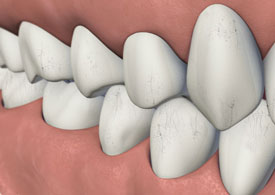
Craze lines

These are tiny cracks that only affect the outer enamel of the tooth. These cracks are more common in adults. These types of cracks are superficial and are usually of no concern.

Fractured teeth

Fractured Cusp

When a cusp becomes weakened, a fracture may result. The cusp may break off or be removed by a dentist. A fractured cusp rarely damages the pulp, so root canal is not necessary. Your dentist will usually restore the tooth with a full crown.

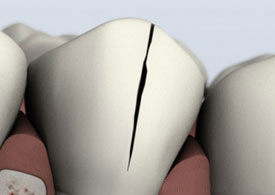
Close up cracked teeth example

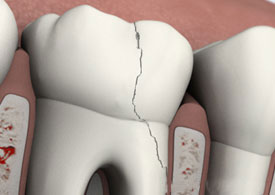
Treatable Cracked Tooth

This type of crack extends from the chewing surface of the tooth and vertically migrates towards the root. In some cases, the crack may extend below the gum line. It is possible for the crack to extend further into the root. Damage to the pulp is commonplace. In this case, root canal treatment is usually necessary. A cracked tooth that is not treated will worsen, resulting in the loss of the tooth. Therefore, early detection is essential.

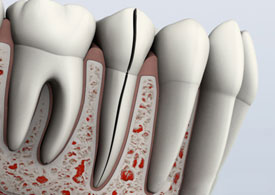
Cracked teeth example

Split Tooth

A split tooth is usually the result of an untreated cracked tooth. It can be identified by a crack with distinct segments. This type of tooth can never be saved intact. Yet, the position and extent of the problem will dictate whether any portion of the tooth can be saved. Sometimes, endodontic retreatment by the doctors and restoration by your dentist can be used to save a portion of the tooth.

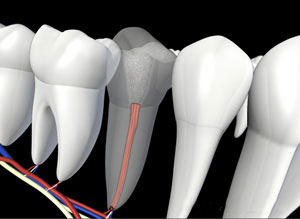
Tooth with inflamed tissue

Vertical Root Fracture

A vertical root fracture begins at the root and extends towards the chewing surface of the tooth. Unfortunately, they show minimal symptoms and may go unnoticed. Treatment involves endodontic surgery if a portion of the tooth can be saved by removal of the fractured root. Otherwise, the tooth will have to be extracted.

What Causes a Cracked Tooth?

Cracked teeth are more common than many patients realize, and a range of everyday factors contribute to them. Chewing on hard items such as ice, unpopped popcorn kernels, or hard candy places sudden stress on enamel that can introduce fractures. Teeth grinding and clenching, known as bruxism, is another significant cause: the repeated pressure wears down and weakens tooth structure over time, particularly in back teeth. Large, older fillings can also undermine the overall integrity of a tooth, leaving it more vulnerable to cracking under normal chewing forces. Age is a factor as well, since teeth naturally become more brittle over time, and cracked teeth are most frequently diagnosed in patients in their 40s and beyond. According to the American Association of Endodontists, cracked teeth show a variety of symptoms and require prompt evaluation, since early diagnosis gives patients the best chance of saving their tooth.

When a crack extends into the pulp chamber, where the tooth’s nerve and blood vessels are located, root canal therapy is often the next step to eliminate the infected tissue and relieve pain. At West Atlanta Endodontics, Ion Plus biocompatible ceramic sealer is used specifically because of its effectiveness in cracked tooth cases, providing a long-lasting seal even in teeth with complex fracture patterns. Following root canal treatment, a crown placed by your general dentist protects the crack from spreading further.

Signs You May Have a Cracked Tooth

Cracked teeth don’t always produce obvious, constant pain, which is part of what makes them difficult to catch early. The pain is often intermittent, appearing when biting down in a specific way or releasing pressure, and may be accompanied by lingering sensitivity to temperature. Common warning signs include:

  • Sharp or stabbing pain when biting or chewing, especially on one side
  • Sensitivity to hot, cold, or sweet foods that lingers after the source is removed
  • Discomfort that’s difficult to localize to a specific tooth
  • Swelling or tenderness in the gum near the affected tooth
  • A tooth that previously had a large filling or crown developing new symptoms

Because cracks can be invisible on standard X-rays, a clinical exam under magnification combined with cone beam CT imaging is the most reliable way to confirm a diagnosis and assess how far the crack extends, information that directly determines whether the tooth is restorable.

Treatment Options for Cracked Teeth

Treatment is matched to the crack type, depth, and whether the pulp has been affected. A craze line needs no treatment. A fractured cusp that hasn’t reached the pulp is typically handled by your general dentist with a crown. When the crack extends into the pulp, root canal therapy is indicated before the crown is placed, removing the infected tissue and sealing the canal to prevent further infection.

Split teeth and vertical root fractures carry a much less favorable prognosis. A split tooth may be partially salvageable depending on how far the fracture extends. A vertical root fracture typically cannot be saved and extraction is usually recommended. This is why early diagnosis matters so much: a crack caught before it reaches the pulp or root is far easier and less costly to treat than one that has been progressing for months.

At West Atlanta Endodontics, the treatment recommendation is always based on what gives the tooth the best long-term prognosis, not what’s quickest. If a tooth isn’t restorable, the doctors will tell you clearly and help you understand your replacement options.

Cracked Tooth Repair and Treatment in Marietta, GA

Dr. Norrington and Dr. Smithson bring decades of combined experience in endodontics, with advanced training in treating complex dental emergencies like cracked teeth. At West Atlanta Endodontics, every cracked tooth case is evaluated under surgical microscopes, giving the doctors visibility into hairline fractures that are invisible to the naked eye and that standard X-rays routinely miss.

The practice uses ultrasonic irrigation technology and biocompatible Ion Plus ceramic sealer to ensure thorough cleaning and long-lasting results. Same-day emergency appointments are available for patients experiencing acute pain, and the front desk team verifies your insurance benefits and calculates your estimated out-of-pocket costs before treatment begins so there are no billing surprises. West Atlanta Endodontics is out-of-network with most PPO plans and files claims on your behalf as a courtesy. Flexible payment options are also available.

Cracked Tooth Treatment in Marietta, GA: Frequently Asked Questions

Can a cracked tooth always be saved?

It depends on the crack type and how far it has progressed. Craze lines and fractured cusps are highly treatable. Cracks that extend into the pulp can usually be treated with root canal therapy and a crown. Split teeth may be partially salvageable. Vertical root fractures generally cannot be saved, and extraction is typically the recommendation. The key is getting an accurate diagnosis early: the sooner a crack is identified, the more treatment options remain available.

How is a cracked tooth diagnosed?

Diagnosis involves a clinical examination, bite tests, cold testing, and often cone beam CT imaging. Standard X-rays frequently miss cracks entirely, especially vertical fractures and early-stage pulp involvement. At West Atlanta Endodontics, surgical microscopes are used during the exam to identify crack lines that would otherwise go undetected. This level of diagnostic precision is why cracked tooth cases are best evaluated by an endodontist rather than a general dentist.

Will a crown fix a cracked tooth?

A crown alone doesn’t treat the internal damage: it protects the tooth structurally. If the crack hasn’t reached the pulp, a crown placed by your general dentist may be sufficient to prevent the crack from spreading. If the pulp is involved, root canal therapy is needed first to remove the infected or damaged nerve tissue, followed by a crown. Placing a crown without addressing pulp involvement won’t resolve the pain and may allow the infection to continue.

What happens if a cracked tooth isn’t treated?

An untreated crack typically worsens over time. Chewing forces cause the crack to propagate deeper, increasing the risk of pulp infection, abscess, or the tooth splitting entirely. A crack that could have been treated with root canal therapy and a crown may eventually reach the root and become unrestorable. Early treatment is almost always less invasive and less costly than addressing the tooth after the damage has compounded.

Cracked Tooth Treatment in Marietta, GA

Dr. Norrington and Dr. Smithson evaluate and treat cracked teeth at their Marietta, GA endodontic practice and Cartersville location. If you’re experiencing pain when biting, unexplained tooth sensitivity, or have been told you may have a cracked tooth, contact West Atlanta Endodontics to schedule an evaluation. Referring dentists can submit cases through the referral form.

Why See an Endodontist

Cracked tooth diagnosis requires more than a standard exam

Standard X-rays routinely miss cracks entirely. The right diagnostic tools determine whether a fracture is found early — or missed until it reaches the root.

Capability
General Dentist
✦ WAE Endodontist
Surgical operating microscope
Not standard
Every case
CBCT 3D cone beam imaging
Rarely on-site
On-site at WAE
Root canal on the same visit
Referral required
Same appointment
Ion Plus biocompatible sealer
Not used
Standard at WAE
Ultrasonic irrigation
Rarely used
Every root canal
Cases limited per day
High-volume schedule
Select cases only
West Atlanta Endodontics is out-of-network with most PPO plans. Your benefits are verified and your estimated costs are calculated before treatment begins.
Your Treating Endodontists

Four-doctor practice. Every case evaluated under a surgical microscope.

Dr. Norrington, Dr. Smithson, Dr. Hwang, and Dr. Urrutia limit their daily caseload to ensure each patient receives focused, unhurried attention.

Board-trained endodontists at every appointment

All four doctors hold specialty training in endodontics. You will never see a general dentist performing a root canal or cracked tooth evaluation at this practice.
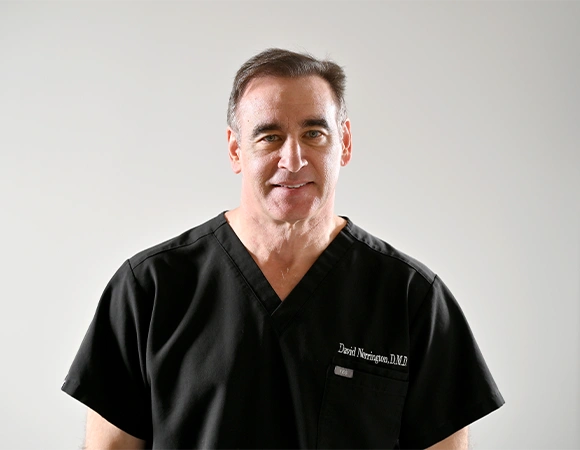
Dr. David W. Norrington, DMD
Dr. David W. Norrington
DMD · Endodontics
Engineering background from Georgia Tech. DMD, Medical University of South Carolina — finished top of his class. Endodontic residency at the University of Alabama. Private practice since 2007.
ADA · AAE member
Meet Dr. Norrington →
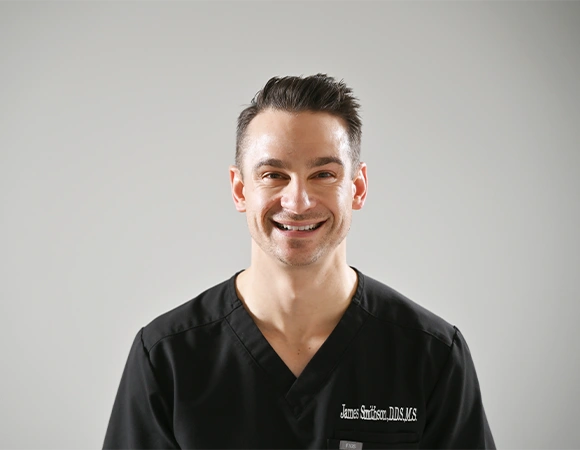
Dr. James A. Smithson II, DDS, MS
Dr. James A. Smithson II
DDS, MS · Endodontics
MS and Specialty Certificate in Endodontics. Limits his daily schedule to a select number of cases to ensure every patient receives the time and care they deserve.
Quality over quantity
Meet Dr. Smithson →
Dr. Jae I. Hwang, DDS
Dr. Jae I. Hwang
DDS · Endodontics
Chemical engineering, Georgia Tech. DDS from Case Western Reserve. Completed the Army Advanced Endodontics Residency and served 26 years as a US Army Dental Corps officer. Honorably retired 2021.
US Army Dental Corps (Ret.)
Meet Dr. Hwang →
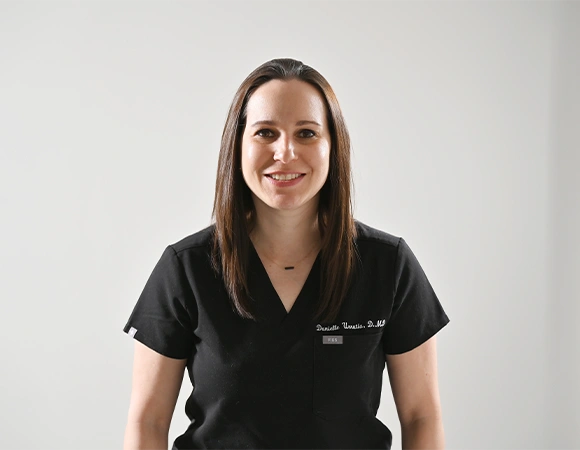
Dr. Danielle Urrutia, DMD
Dr. Danielle Urrutia
DMD · Endodontics
Dental school at LECOM. General dentistry in North Carolina before completing two years of specialty training in the NYU Langone Endodontic Residency program.
NYU Langone trained
Meet Dr. Urrutia →
Surgical operating microscopes
CBCT 3D cone beam imaging
Ion Plus ceramic sealer
Ultrasonic irrigation
We Handle Your Insurance.

QUESTIONS?

Call us at (770) 944-8822

Our team verifies your benefits, calculates your estimated portion, and files claims directly to your insurance company so there’s no surprises.