
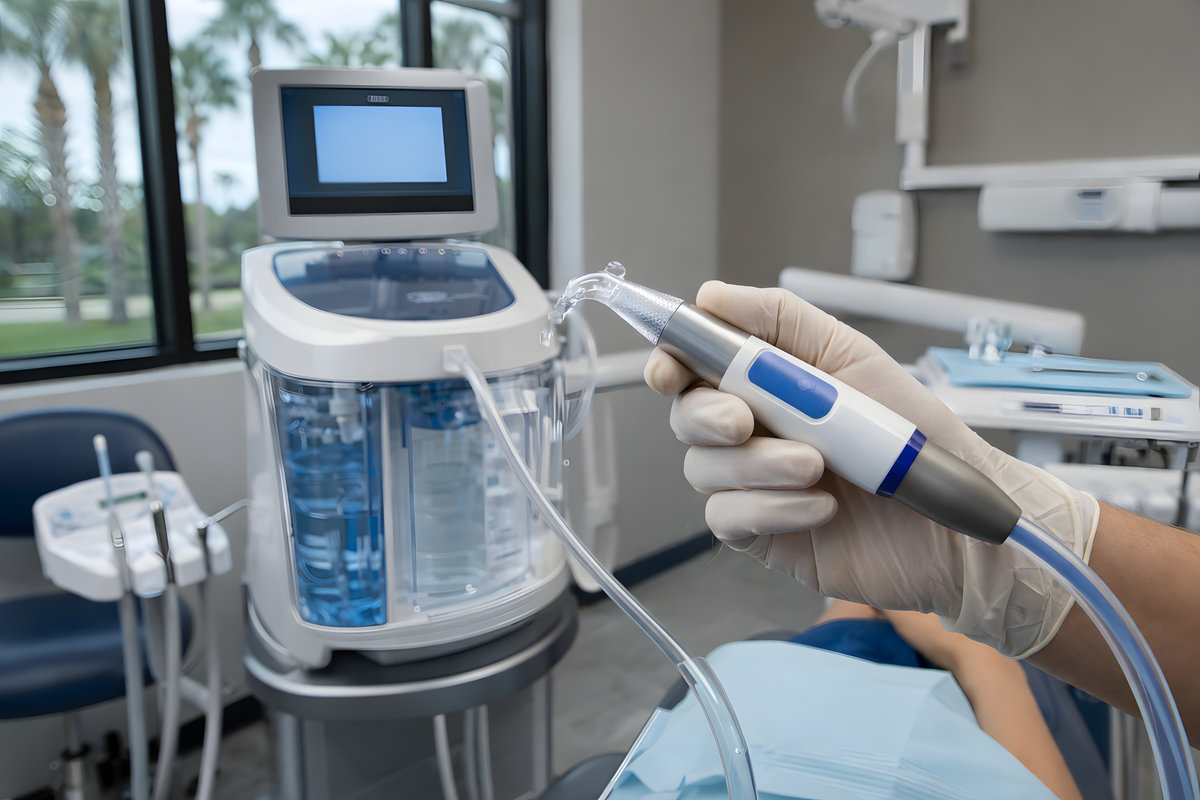
Few dental procedures have a worse reputation than the root canal, and almost none of that reputation is deserved. For years, patients have walked into endodontic offices braced for the worst, shaped by secondhand stories and outdated comparisons. What they tend to discover is that the fear was far greater than the experience itself. Understanding what the procedure actually involves, and what research says about how patients feel afterward, goes a long way toward making an informed decision about your dental health.
At West Atlanta Endodontics, our team is focused exclusively on endodontics, which means every appointment is built around delivering this type of care with precision and genuine attentiveness to patient comfort. If your general dentist has recommended root canal therapy, you are already in good hands. We want to give you an accurate picture of what to expect so you can move forward with confidence.
What a Root Canal Actually Does
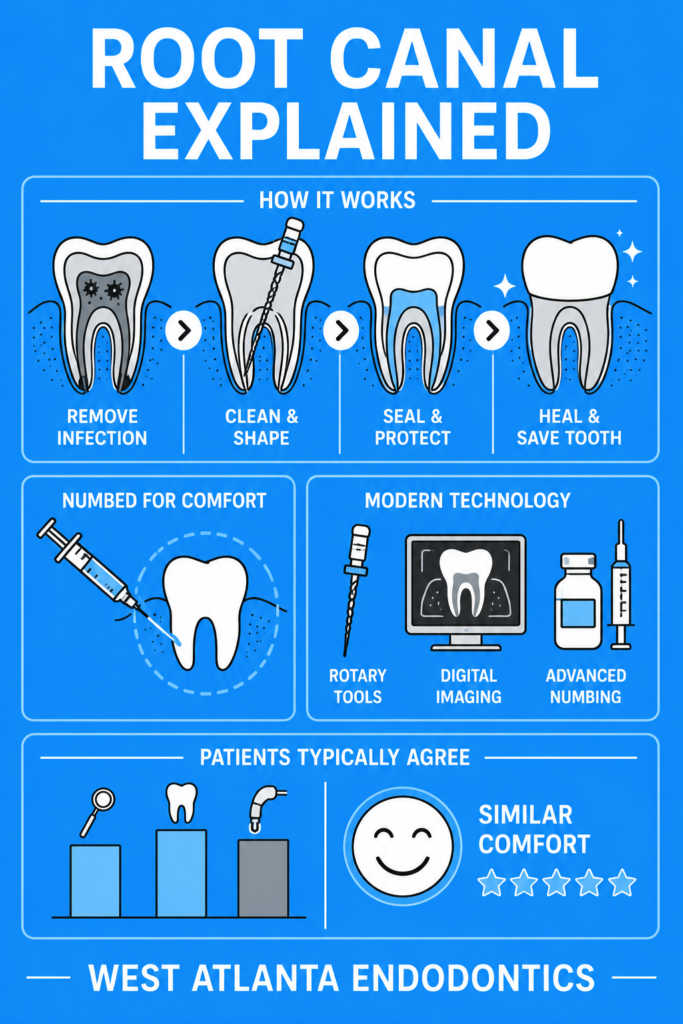
A root canal treats the source of your pain rather than adding to it. When the pulp inside a tooth becomes infected or inflamed from decay, a crack, or repeated procedures, the discomfort you feel is a result of that damage. The procedure removes the infected tissue, cleans and shapes the root canals, and seals the tooth to prevent further infection. By the time treatment begins, the area is thoroughly numbed, and most patients describe the sensation as similar to having a filling placed.
Modern endodontics has advanced considerably from the procedures people heard about decades ago. Specialists now use rotary instruments, digital imaging, and refined anesthetic techniques that make treatment more predictable and more comfortable than ever before. A study on patient perceptions of root canal treatment, published by the National Institutes of Health, found that many patients who had previously undergone the procedure rated it no worse than other common dental treatments. The experience, for most people, is far more manageable than anticipated.
Setting the Record Straight on Common Myths
There is no shortage of misinformation about root canals, and it shapes how patients feel before they ever sit in the chair. A closer look at some of the most persistent myths about root canals reveals just how far public perception lags behind clinical reality.
Root Canals Are Extremely Painful
This is the most common misconception, and it has a simple explanation: the pain people associate with root canals is almost always the pain of the infection that makes the procedure necessary. By the time you are being treated, local anesthesia has been administered, and the procedure itself is designed to eliminate the problem rather than create one. Most patients are genuinely surprised by how uneventful the experience feels.
It Is Better to Pull the Tooth
Saving a natural tooth is almost always preferable to extraction. A missing tooth sets off a chain of consequences, including bone loss, shifting of surrounding teeth, and the eventual need for an implant or bridge. A treated and properly restored tooth can serve you well for many years, and endodontists are trained specifically to make that outcome possible. Understanding the full range of endodontic procedures available helps clarify why preservation is typically the better path.
Root Canals Are Linked to Illness
This claim has circulated for a long time without credible scientific backing. Major dental and medical organizations have thoroughly reviewed the evidence and confirmed that root canal treatment is both safe and effective. The procedure removes infection from the body; it does not introduce it.
What Recovery Looks Like
Preparing for what comes after the procedure helps set reasonable expectations. Some tenderness in the treated area is normal for a few days, particularly if the tooth was significantly infected beforehand. Over-the-counter pain relievers are usually enough to manage any discomfort during that window. Reading through guidance on managing discomfort after endodontic treatment gives you a clear picture of what is typical and what warrants a follow-up call to our office. Most patients return to their normal routines the same day or the following morning.
Reviewing what to expect before your endodontic treatment appointment is also worthwhile. Walking in prepared makes a meaningful difference in how relaxed and informed you feel throughout the process.
Schedule Your Consultation at West Atlanta Endodontics
Dr. David Norrington brings a perspective shaped by both engineering and endodontics. He earned his D.M.D. at the Medical University of South Carolina, where he finished at the top of his class, before completing his endodontic residency at the University of Alabama School of Dentistry. He has been in private practice since 2007. Dr. James Smithson II and Dr. Jae Hwang round out our team, serving patients across our Marietta and Cartersville, GA locations.
If you have been putting off a recommended root canal, we encourage you to come in with any questions you have. Our team is committed to making sure you feel informed and at ease before treatment begins. Contact our office to schedule your consultation today.