
You knocked a tooth years ago, it seemed fine, and life went on. Then one day, out of nowhere, that same tooth starts aching, darkening, or causing sensitivity you can’t ignore. It feels like something new, but the problem actually started long ago. Yes, an old tooth injury can absolutely lead to the need for a root canal years or even decades later, and understanding why can help you take the right next step without delay.
At West Atlanta Endodontics, we see this more than you might expect. Serving patients in Marietta, the greater Atlanta area, and Cartersville, our team specializes exclusively in endodontic care, which means we are uniquely equipped to evaluate trauma-related tooth concerns and determine whether root canal therapy is the right course of treatment. If an old injury is causing new symptoms, you deserve answers from specialists who focus on nothing else.
Why Trauma Can Cause Delayed Nerve Damage
Dental trauma is more complex than a visible crack or chip. When a tooth takes a significant hit, the internal structures, including the pulp, which contains the nerves and blood vessels, can be disrupted even if the outside of the tooth looks perfectly intact.
The Tooth May Survive the Injury, but Not Forever
In many cases, a traumatized tooth will stabilize and remain symptom-free for years. The pulp can continue functioning for a long time after an injury, but it is often in a weakened state. Over time, the compromised tissue may gradually break down, become infected, or simply stop receiving an adequate blood supply. When this happens, the tooth can no longer sustain itself without intervention.
What Happens Inside the Tooth Over Time?
Once damaged, the pulp tissue is vulnerable to bacterial invasion and slow deterioration. According to the American Association of Endodontists, teeth that have experienced traumatic injuries, including concussions, luxations, or fractures, should be monitored regularly because pulp necrosis can develop gradually and without obvious warning signs. This is exactly why a tooth can appear healthy for years before symptoms surface.
Signs Your Old Injury May Now Need Treatment
It is not always obvious when a previously injured tooth has crossed the line from “watch it” to “treat it.” However, there are several signals worth paying attention to. The following signs may indicate the pulp of the tooth has become compromised:
- Darkening or discoloration: A tooth turning gray or yellow can indicate that the pulp is dying.
- Lingering sensitivity: Pain to hot, cold, or pressure that does not resolve within a few seconds is a red flag.
- Spontaneous pain: Aching or throbbing with no clear trigger can point to pulp involvement.
- Swelling or a pimple on the gum: This may signal an abscess forming at the root tip.
- Pain when biting: Discomfort while chewing can be a sign of infection or root involvement.
These symptoms should never be dismissed, even if the original injury feels like ancient history. Any one of these signs warrants an evaluation from an endodontic specialist as soon as possible.
What to Expect from Evaluation and Treatment
When you come in with a history of dental trauma, we take a thorough approach to diagnosis. That means reviewing your history, taking digital X-rays, and using specialized testing to assess pulp vitality. In some cases, cone-beam CT imaging provides a three-dimensional view of the roots and surrounding bone, revealing damage invisible to standard X-rays.
Your Treatment Depends on What We Find
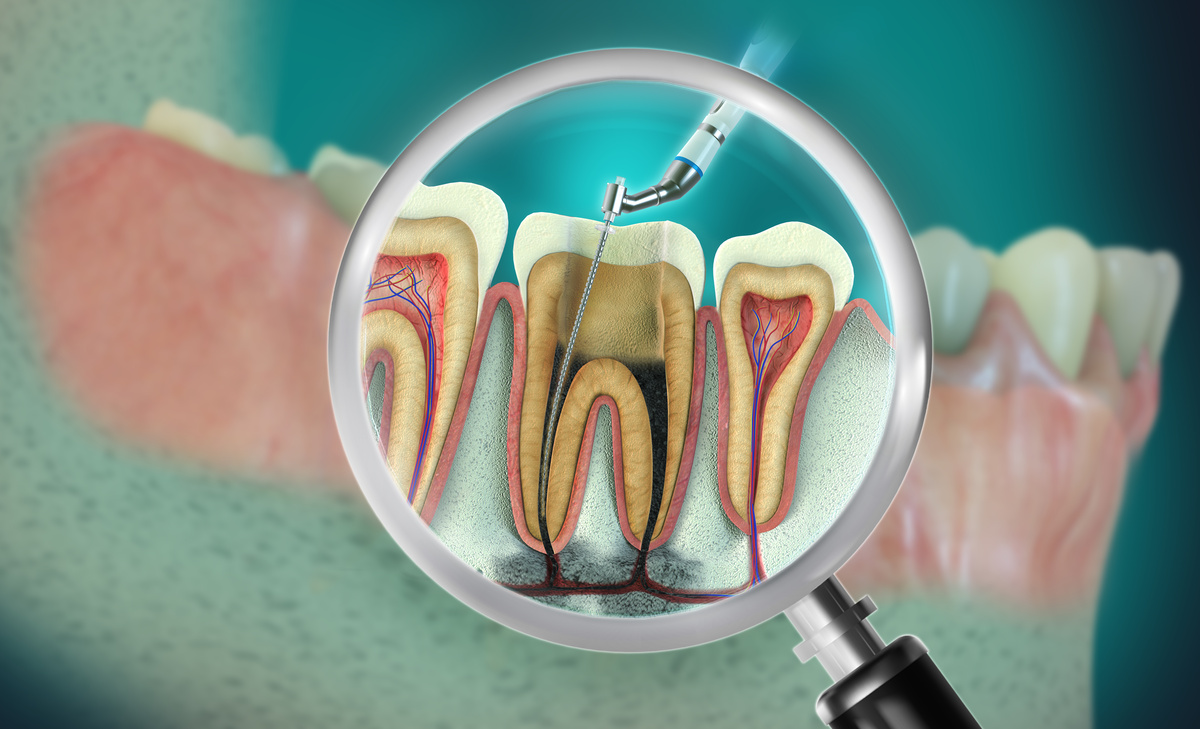
If root canal therapy is needed, the procedure involves removing the damaged or infected pulp tissue, thoroughly cleaning the canals, and sealing the tooth to prevent reinfection. Many patients are surprised to find the procedure far more comfortable than expected. Our team places a high priority on patient comfort and education, so you will understand exactly what is happening and why at every stage. In some situations where infection has spread to the root tip, an apicoectomy may be recommended as a follow-up procedure to treat the area directly.
The Importance of Long-Term Monitoring After Trauma
Even if a traumatized tooth shows no current symptoms, it is worth establishing a relationship with an endodontic practice to monitor it properly. Endodontists are trained to detect subtle changes in root structure and pulp health before they escalate into emergencies. Visiting your general dentist regularly and getting appropriate referrals when red flags appear is the best way to catch problems early.
Your Old Tooth Injury Deserves a Second Look: West Atlanta Endodontics Is Here to Help
An old injury does not have to become a bigger problem. At West Atlanta Endodontics, Dr. Smithson, Dr. Norrington and our team bring a focused, patient-centered approach to every case, whether we are treating a sudden flare-up or monitoring a tooth with a complex history. We work exclusively in endodontics, which means every tool, every technique, and every conversation is centered on giving your tooth the best possible outcome.
If you have a tooth with a history of trauma and are experiencing new symptoms, or simply want peace of mind, we encourage you to reach out. Our team is ready to evaluate your concerns and guide you toward the right care. Contact our office today to schedule your appointment.